Introduction to VPCs
What is a VPC?
A VPC, or Virtual Private Cloud, is like having your own private corner of the internet 🌐. It's a private network that's completely isolated from the public internet, providing an extra layer of security 🔒 for your applications and data. With a VPC, you have complete control over your network configuration, including IP addresses, subnets, and routing tables. Plus, with the ability to connect your VPC to other networks using VPN or Direct Connect, you can create a flexible and collaborative environment for your team 👨💻.
What are the benefits of using a VPC?
🔒 Security: VPCs provide a private network for your applications, making it more difficult for unauthorized users to access them.
🚀 Scalability: VPCs can be easily scaled up or down to accommodate changes in traffic or demand.
💻 Flexibility: With a VPC, you have control over your network configuration, including IP addresses, subnets, and routing tables.
🔌 Connectivity: VPCs can be connected to other networks, such as on-premises data centers or other VPCs, using VPN or Direct Connect.
👨💻 Collaboration: VPCs allow multiple teams to work together in a secure and isolated environment, improving collaboration and productivity.
How do VPCs work?
A VPC works by creating a private section of the internet 🌐 where your applications and data can live securely 🔒. When you create a VPC, you have complete control over the network configuration, including the IP addresses, subnets, and routing tables 💻. This means you can set up your VPC to meet the specific needs of your applications.
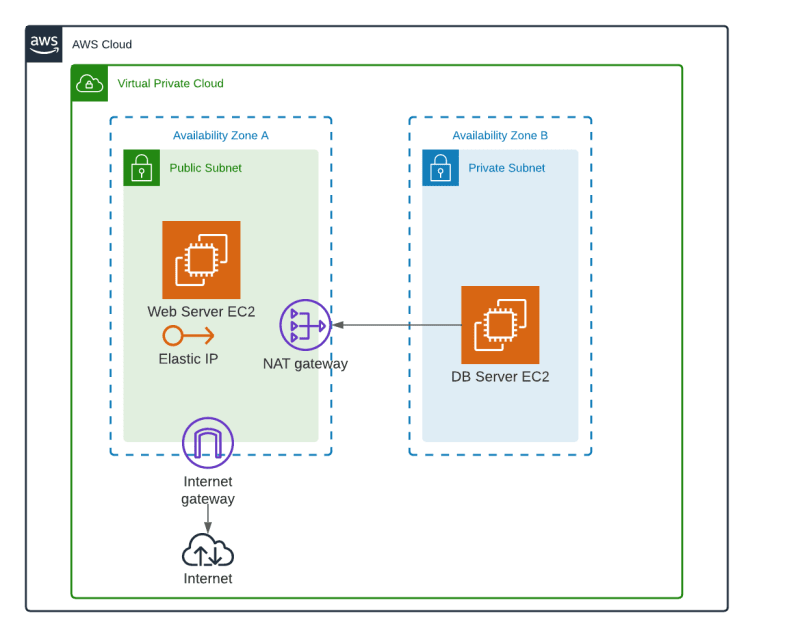
Within your VPC, you can create subnets, which are smaller sections of the network that can be isolated from each other. Each subnet can have its own routing table, which controls how traffic is directed within the subnet and to other subnets within the VPC.
An internet gateway is a crucial component of a VPC. It serves as the entry and exit point for traffic flowing between your VPC and the internet. Without an internet gateway, your VPC would be completely isolated from the outside world and you wouldn't be able to access the internet or allow traffic to come into your VPC from external sources.
When you create a VPC, an internet gateway is automatically created and attached to it. You can then configure your VPC's routing tables to direct traffic to and from the internet through the internet gateway. This allows your applications to communicate with external services and users, while still maintaining the security of your VPC.