public class ClassName {

	// instance variables here
	boolean yesOrNo;

	public ClassName(int val) {/*...*/} // constructor
																		 // constructor overloading is legal

  public static void main(String[] args) {}

}
Instantiating
public class Car {

	int value1;
	boolean value2;

  public Car(int val1, boolean val2)
	{
		value1 = val1;
		value2 = val2;
	}

  public static void main(String[] args)
	{
    Car ferrari = new Car(1, true);
		// create a car instance, note ferrari is a pointer
  }
}
Method
// note this is with-in the classes scope

// make method
public int name(int val) {
	// code
	return val;
}


obj.name(2); // call method


// PRINTING OBJS
// toString will print the returned value instead of the default memory location
public String toString() {return "this is what happens when u print the obj";}


public static void methodName() {}
// static means that an object doenst need to exist to run the method
// it is called by the classname.methodname()
Attribute access
objectName.varName;
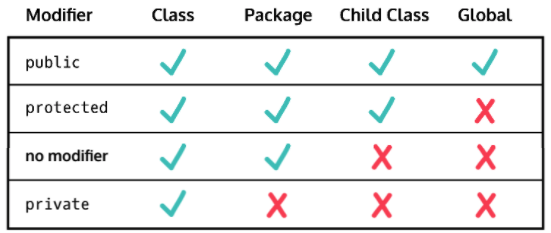
Public & Private
// note that protected may be better than private
public class
public attribute
public method()
public constructor()
This
this.varName;
// refures to the instance variable

// why would i use it
public Dog(String name){
  this.name = name;
}


methodName(this)
// passing the obj
Static variables
public static int val;
// shaired across the entire class
// note static vars do not work with the 'this' keyword
// since they are associated with the class not the object
// instead you use the class name