Normalisation
Part 1 What does normalisation solve
Goal: to minimise redundant data, and prevent anomalies
It is also needed when mapping classes into a database
Update Anomalies
Tables with redundant data may have problems.
Deletion
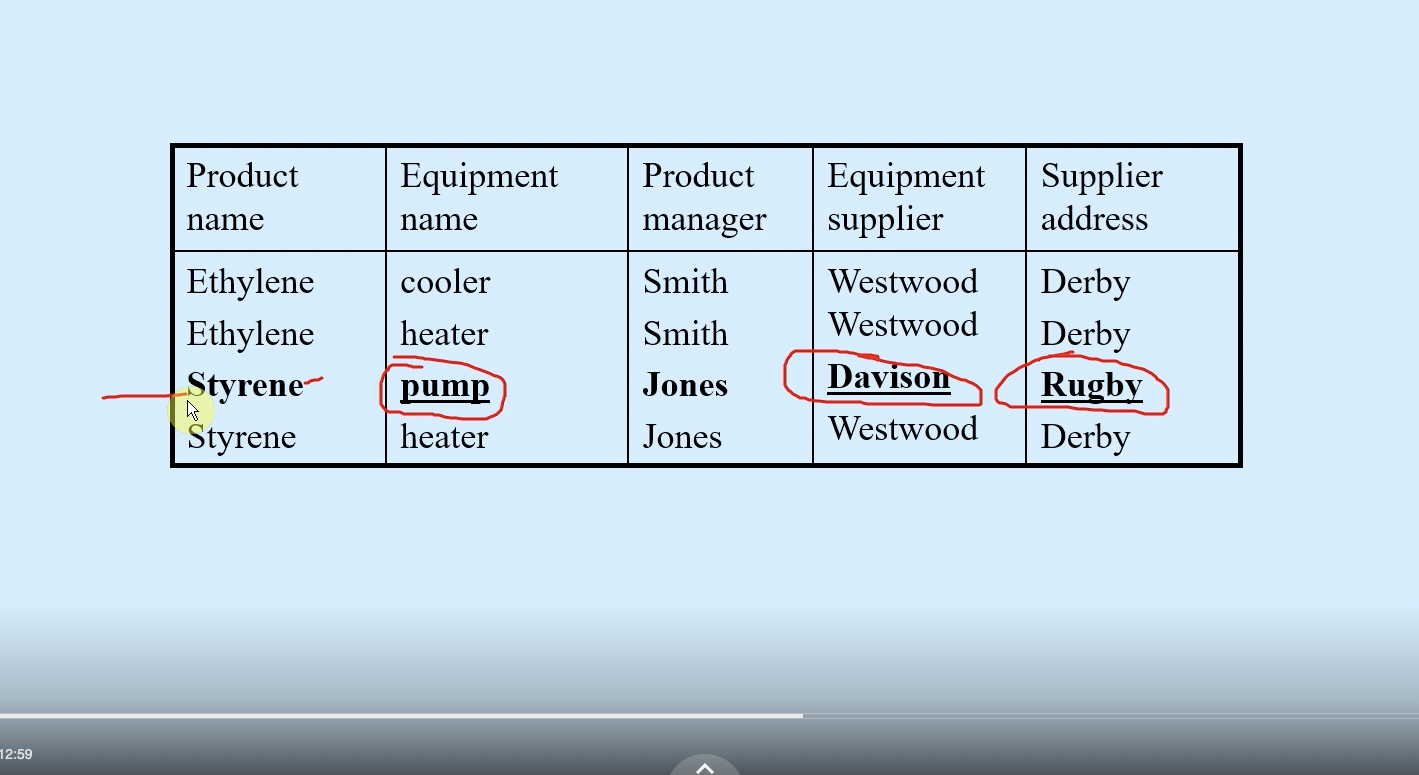
The data for where the supplier address may only be on that row, so if we delete it, we will lose the data that we want to keep.
Insert
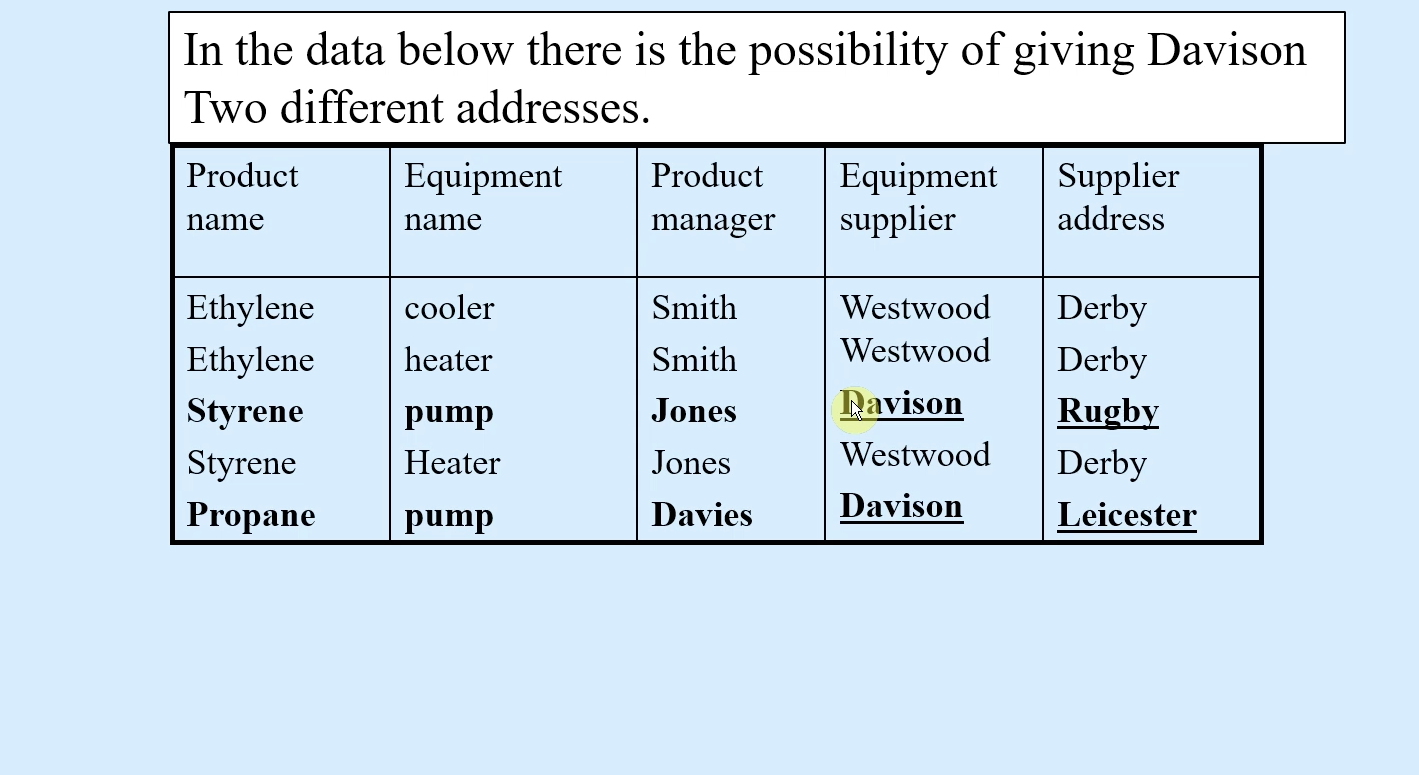
Inserted data maybe inconsistent with data that is already in the table.
What does the data mean?
Modification
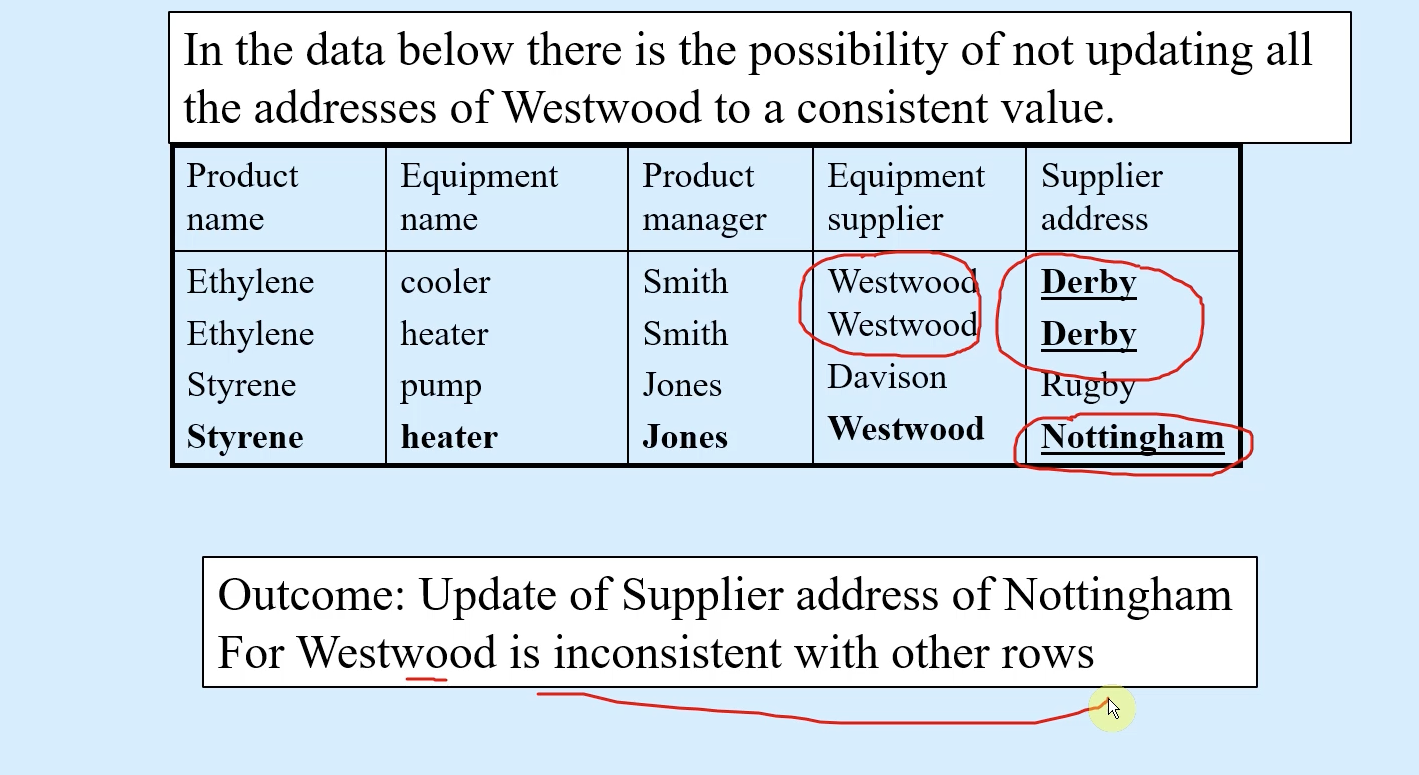
Data is inconsistent since all rows have not been updated.
Part 2 Normal Forms
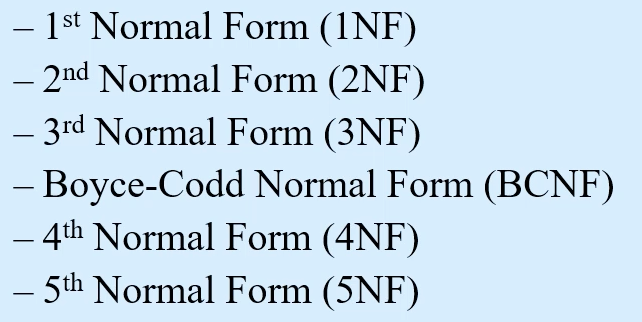
Normal Form - how to normalise using functional dependencies and determinacy diagrams
Normal Form - set of rules that prevent inconsistencies, by removing redundancies
Each higher level adds another constraint to the data, this does come at the cost of slower queries.
First Normal Form
where a primary key is made for each unique row of data
this can be a combination of cols, but the same combination must be unique for a certain value, baso it there needs to be a functional dependency
each cell must have a single value
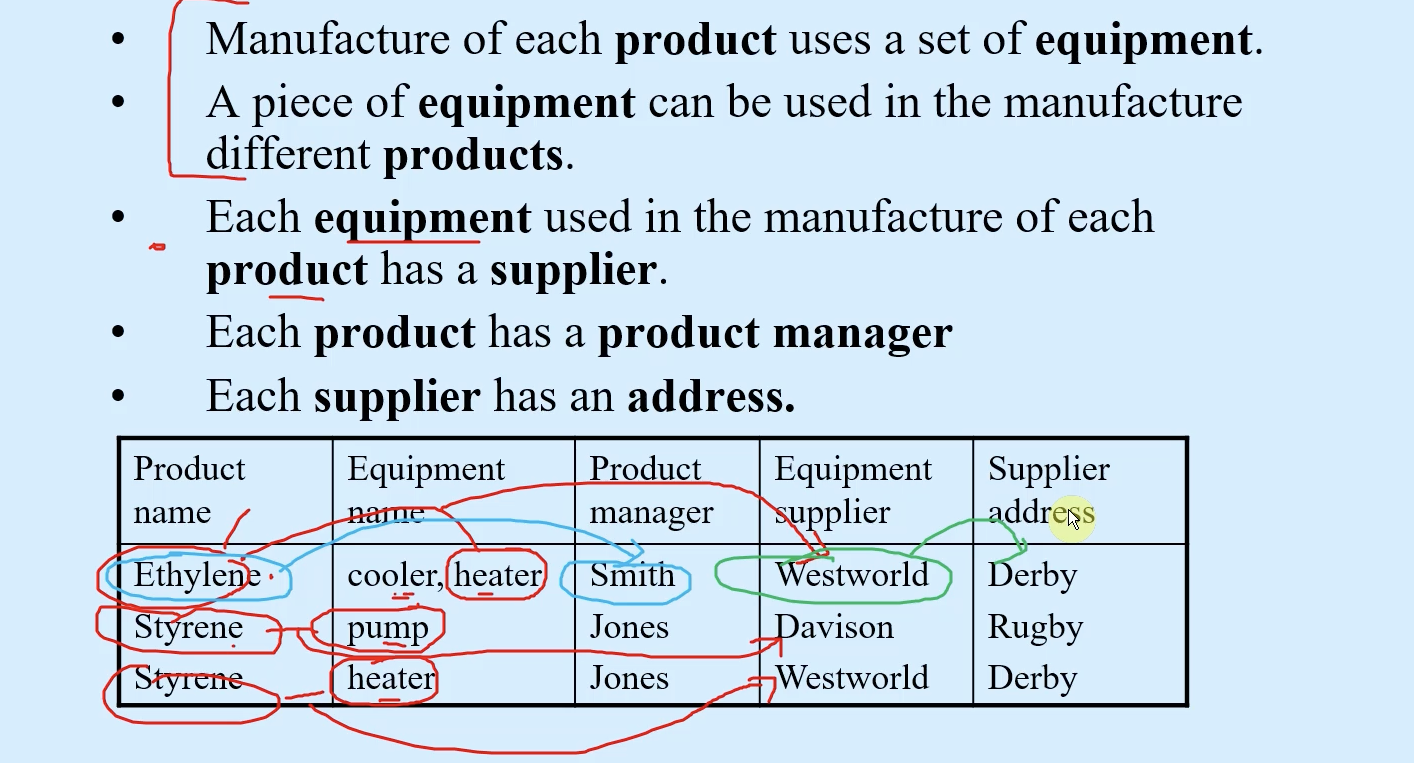
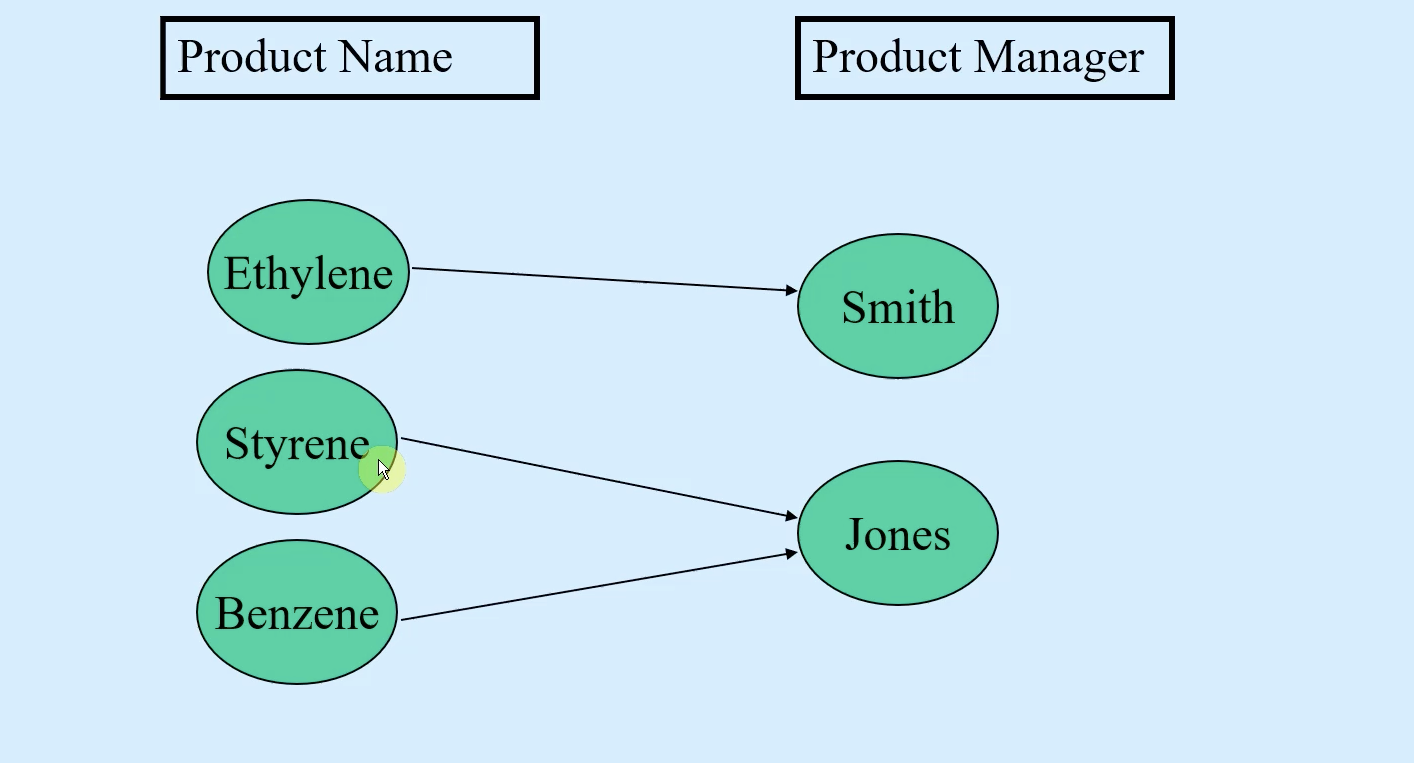
manager is functionally dependent on name
Many to one - is allowed
One to Many - is not allowed
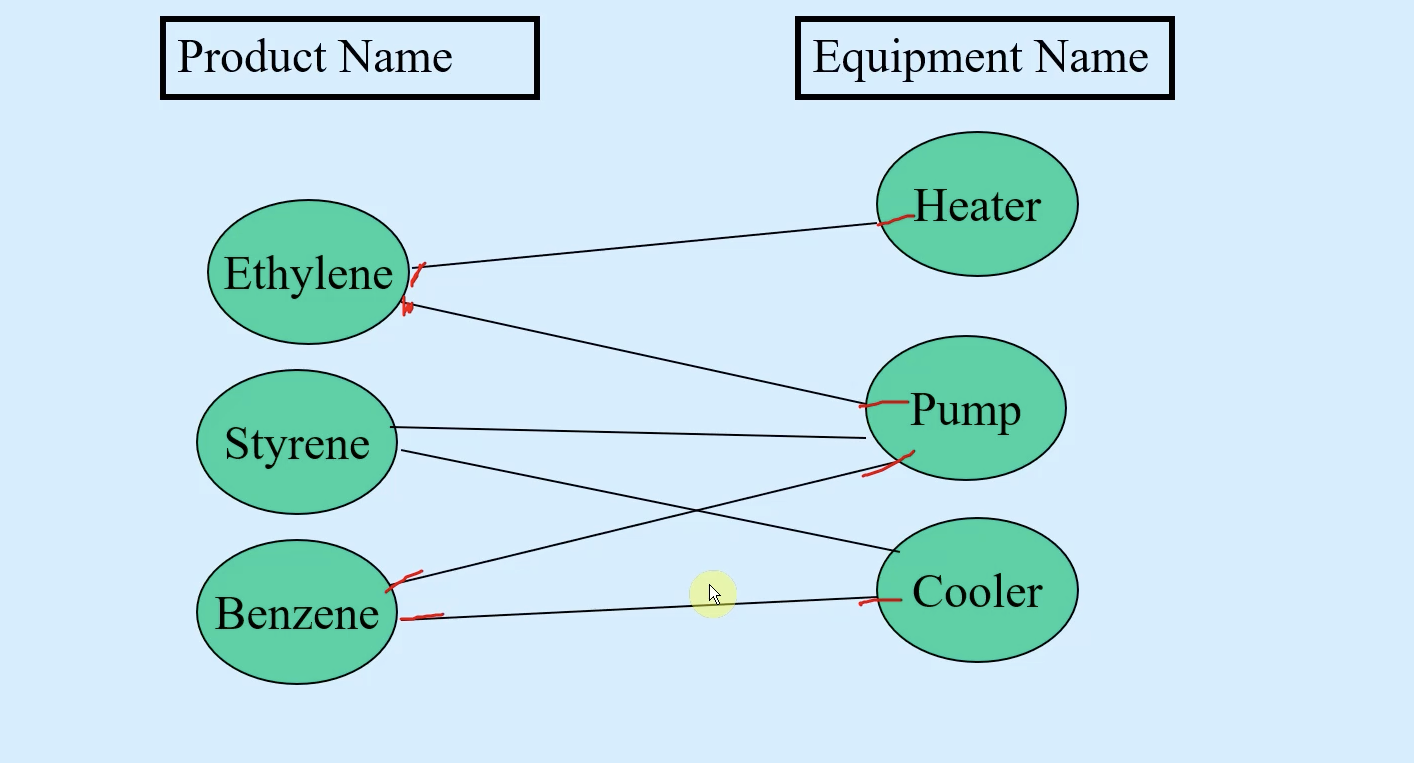
Many to many is not allowed
Determinacy Diagram
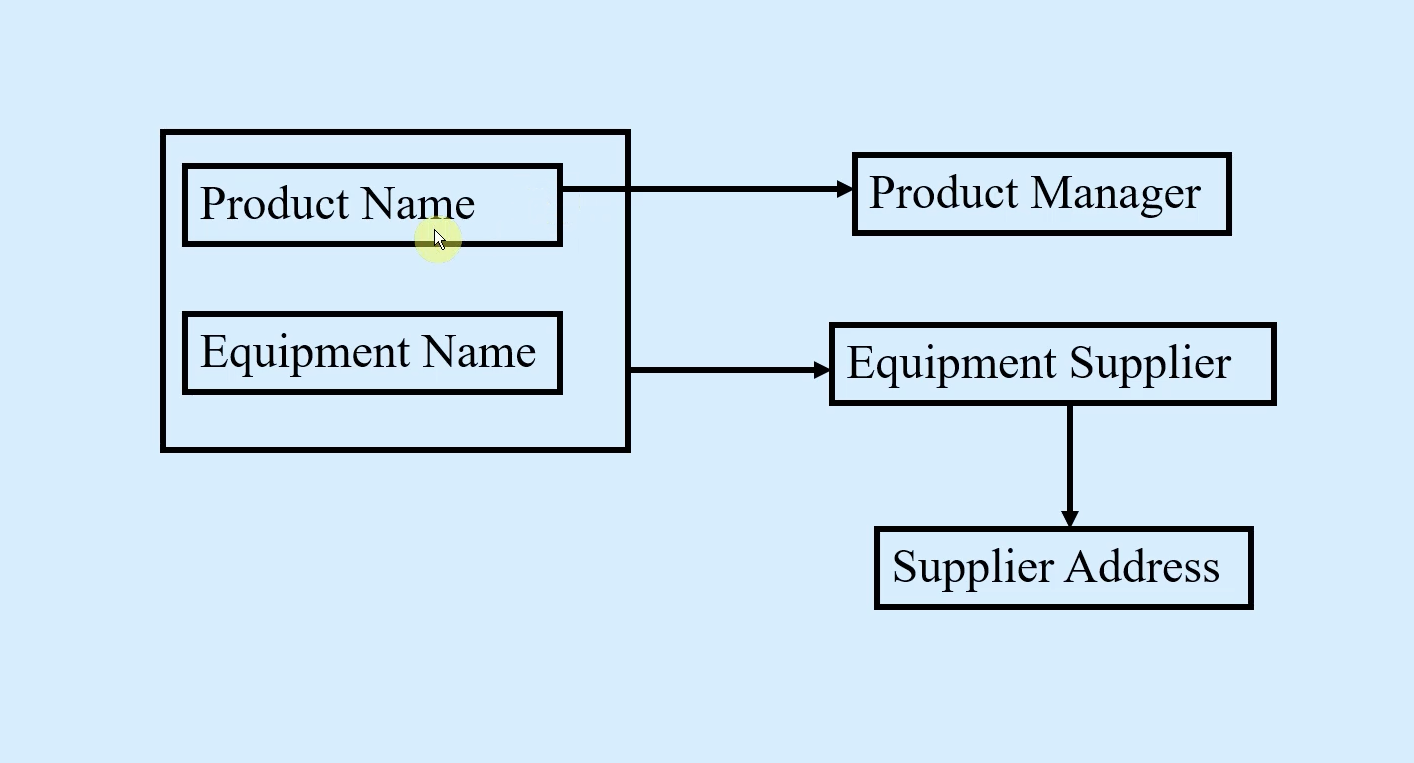
Product name and equipment name determine supplier
Product name determines manager
Primary key is the box
Second Normal Form
Part (primary) key dependency
Each non-primary key, must fully depend on a primary key (product manager does not follow this rule)
Only an issue if the PK is made up of a combination of cols
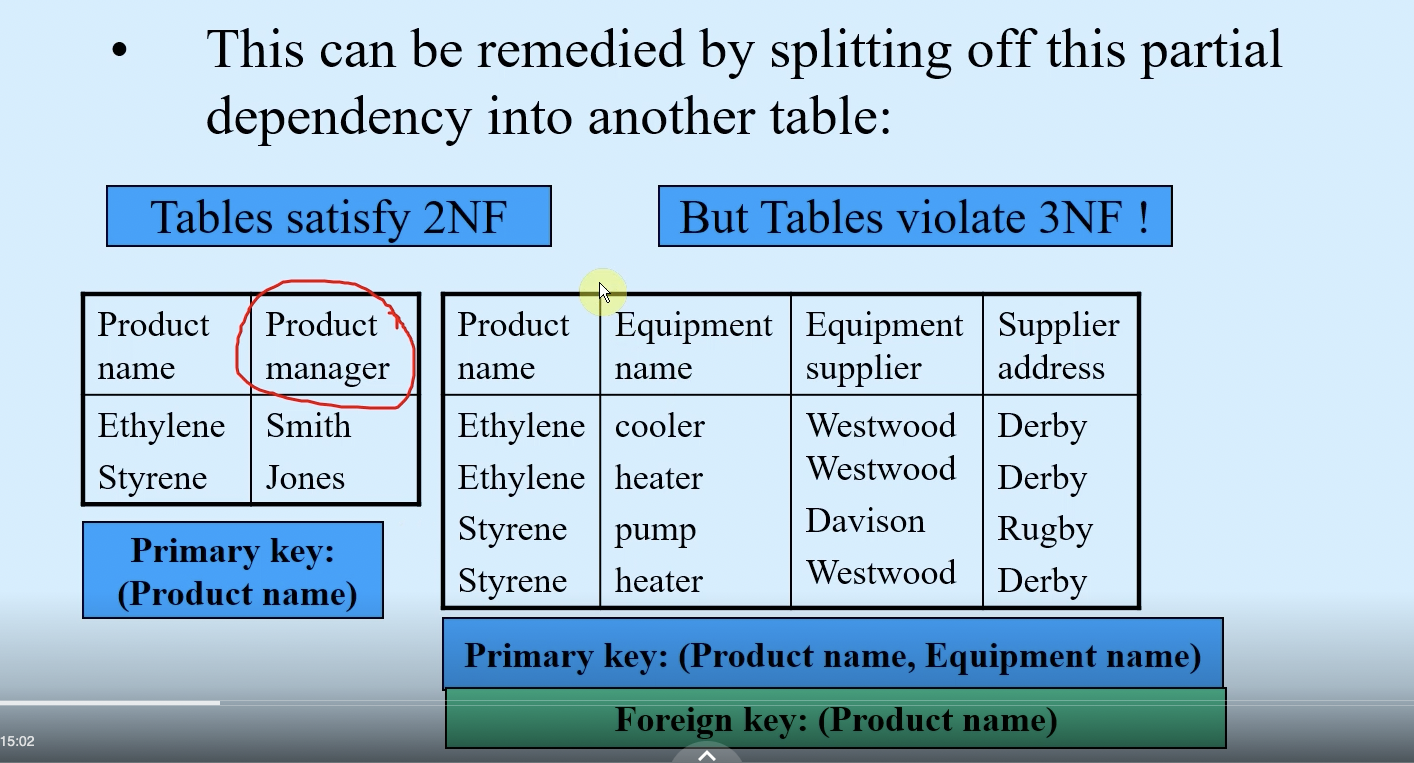
Must split part key dependencies into a new table
Third Normal Form
Removes transitive dependency
transitive dependency - when a column is dependent on a column that is not the primary key
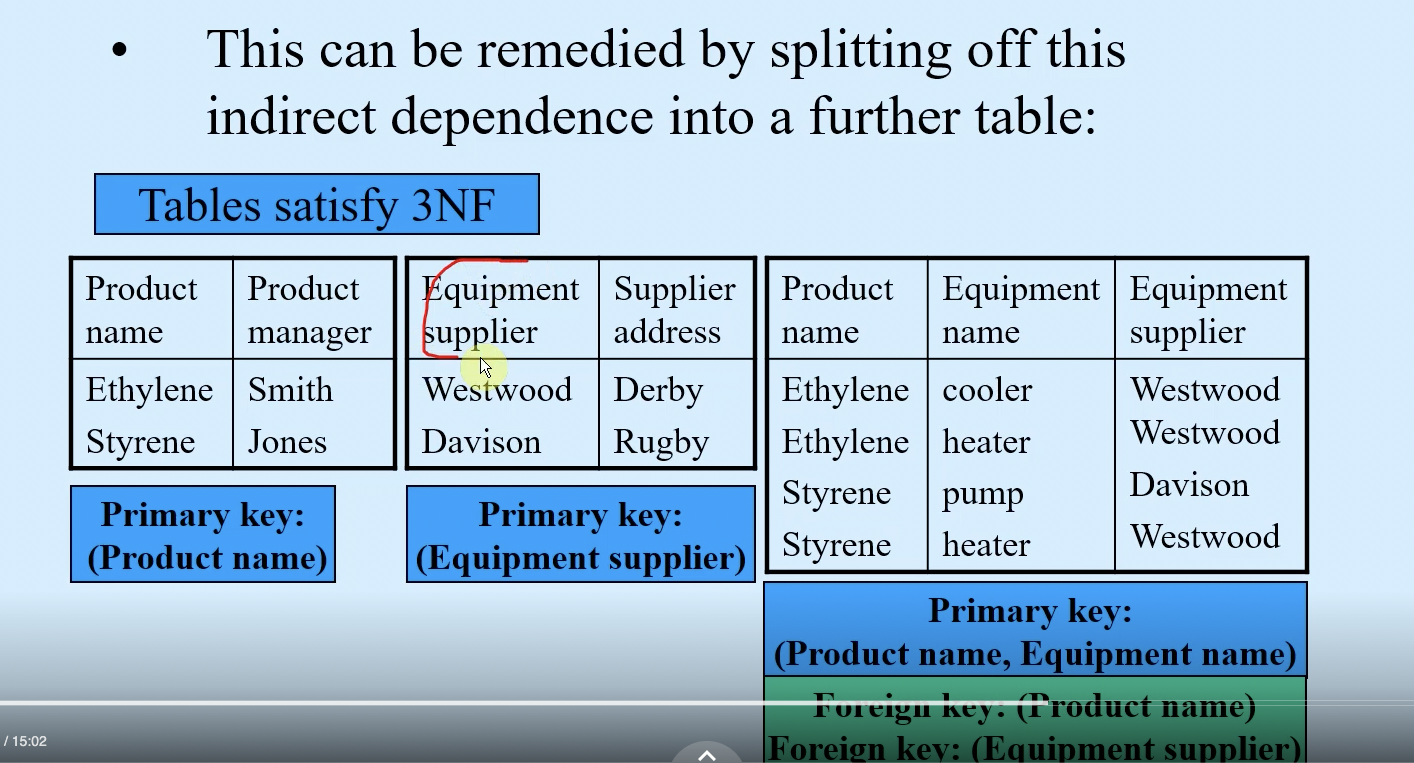
To fix it just put the column in a new table