Scheduling - Chapter 5
Basic
CPU burst - when the cpu executes the process
IO burst - when waiting on IO
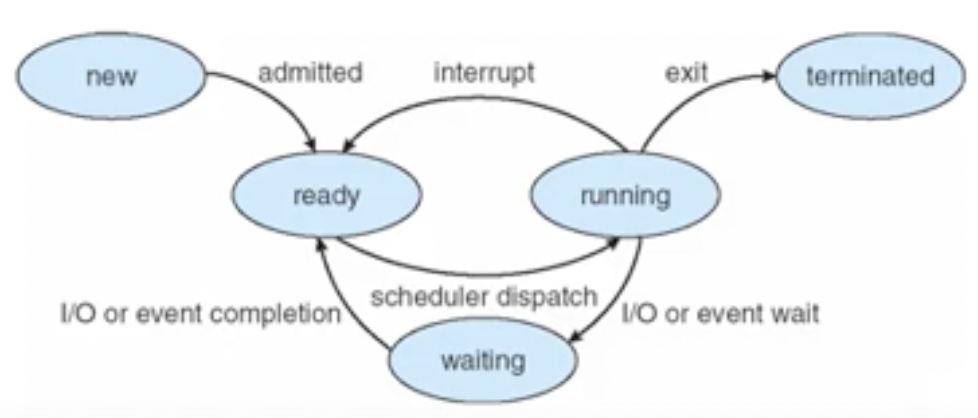
Preemptive - when the process is forced to stop running with out its content (Interrupt), can also mean that the process can be stopped
Non-Preemptive - when the process willingly stops processing (terminates, waiting), can also mean that the process cannot be stopped
Dispatcher
Dispatcher - is what does the context switch, points to the next command, switches to user-mode
Dispatch latency - time from the end of one process to the start of the next
Voluntary - non-preemptive
Involuntary - preemptive
Goals
CPU utilisation - make it work as hard as possible
Though-put - number of processes that complete per n time
Turn around time - time it takes for a process to finish execution
Waiting time - time it takes for the process to start execution since joining the ready queue
Response time - turn around time + waiting time
FCFS
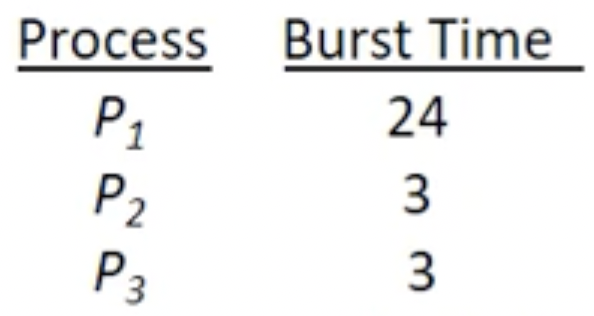
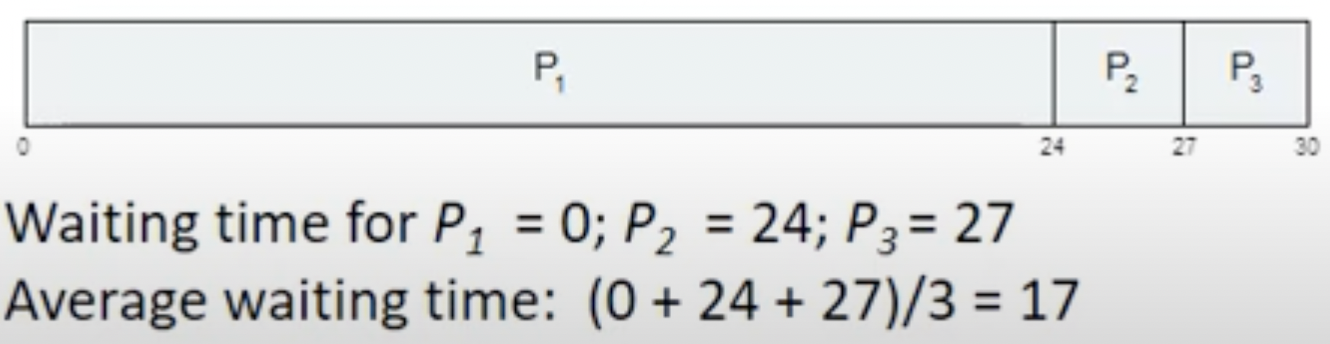
first come first serve
- avg wait time can be anything
- it is non-preemptive
SJF
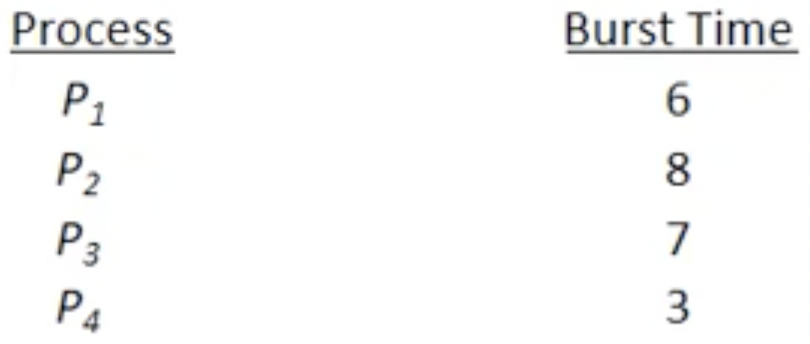
shortest job first:
- not really possible since how do you know the length of the next job
- so job length is determined by the duration of the last cpu-burst
- non-preemptive
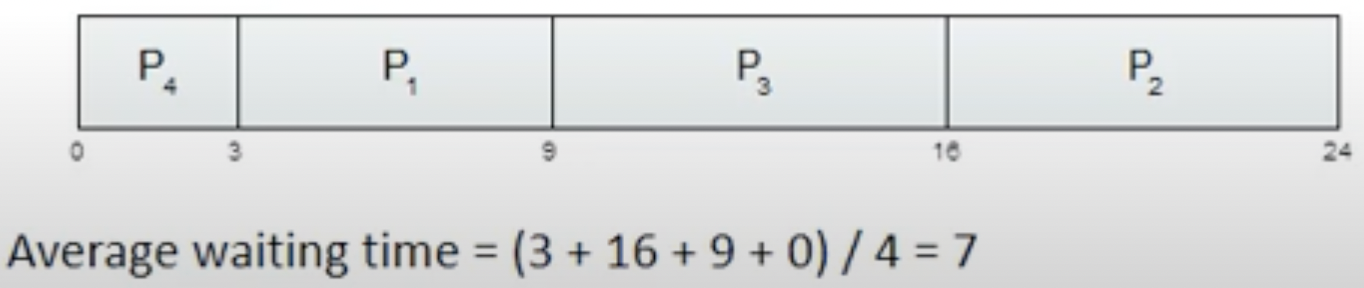
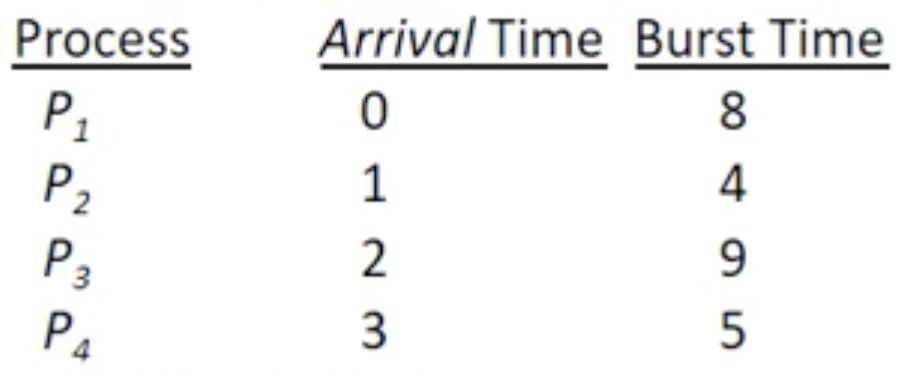
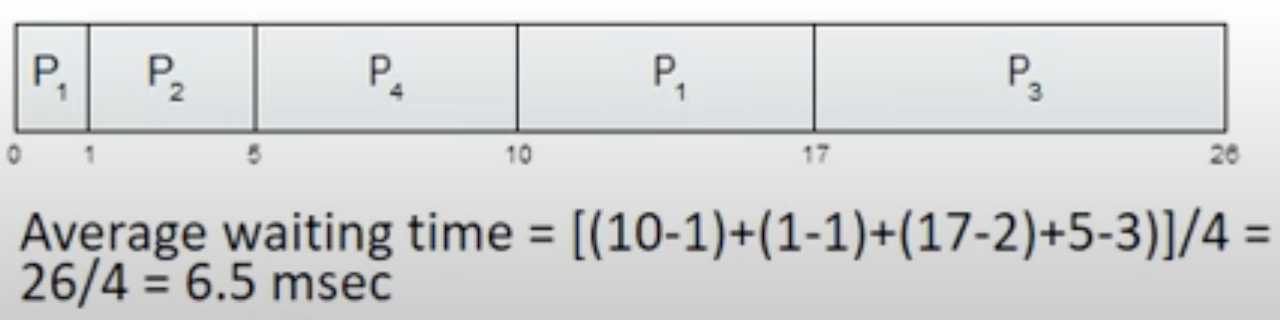
SRJF
shortest remaining job first:
- the same as SJF but will switch context if there is a new shorter job
- preemptive
RR
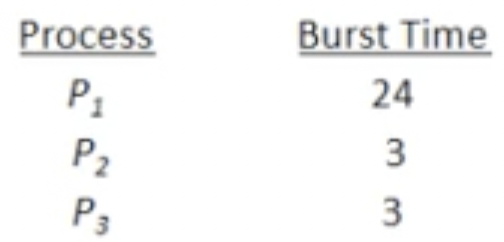
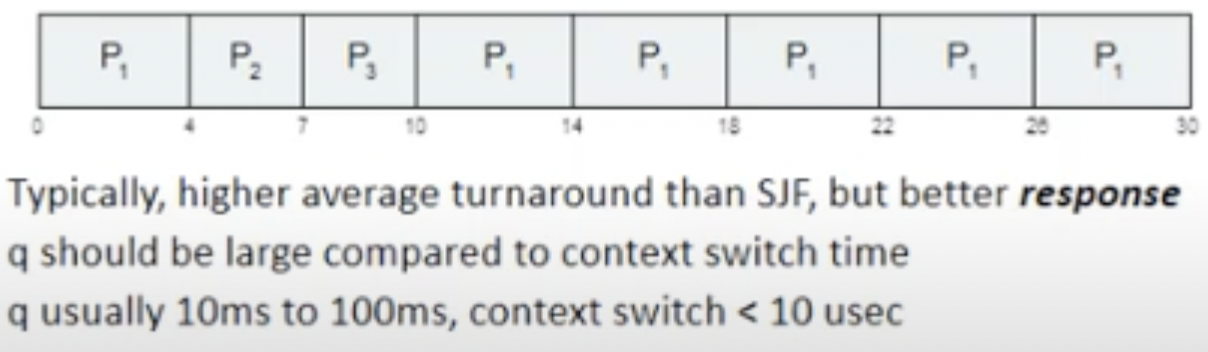
round robin:
- time quantum is specified (10ms)
- if job exceeded time quantum on cpu burst then it is swapped, and sent to the back of the ready queue
- time quantum should not be too low since too many context switches
Priority scheduling
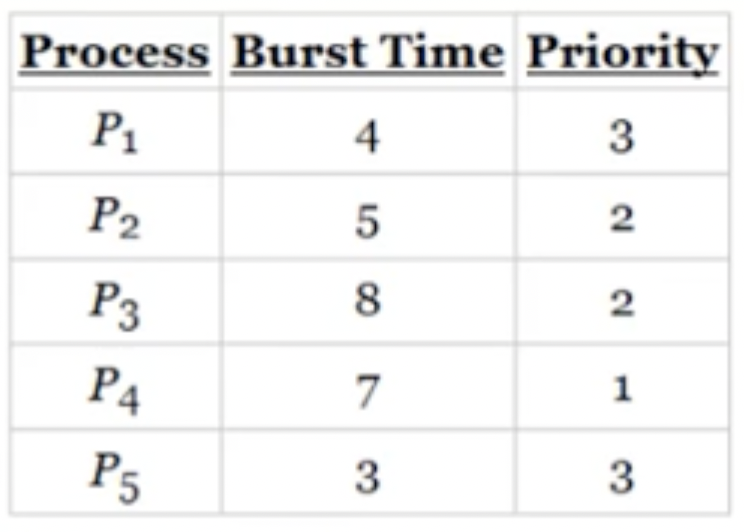
- levels of priority are made, only tasks with the highest priority are executed
- this may cause starvation, so ageing increases priority
- SJF is an example

Multi level queues
- multiple queues, each queue has a priority level
- each queue will have another scheduling mechanism within i.e. RR
- Typically foreground processes have higher priority over batch processes
- Ageing can allow a process to move up levels
- Processes can also be demoted, for example if they take too long
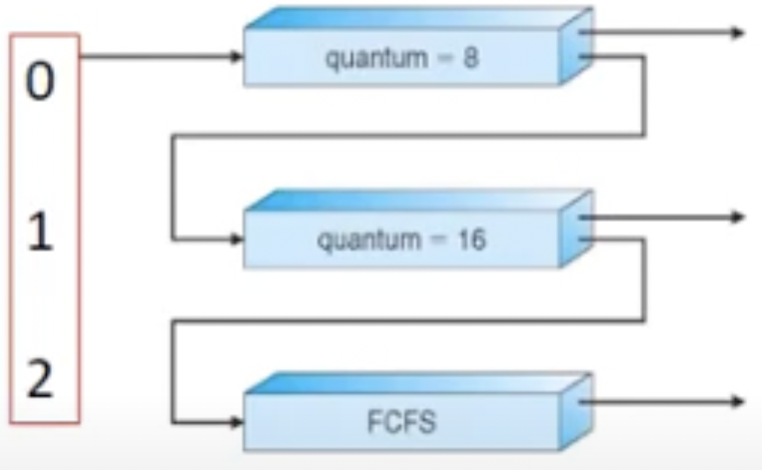
level 0, if the task takes longer than 8, it will be demoted to level 1
level 1, if the taks takes longer than 16, it will be demaoted to level 2
level 2, first come first serve
Thread scheduling
process-concentration scope - the order in which threads within a kernel thread are executed
system-concentration scope - the order in which all kernel threads are executed
Asymmetric Multiprocessing and Symmetric Multiprocessing
Asymmetric Multiprocessing - once core is a master, and does the scheduling to the slaves
Symmetric Multiprocessing - all cores do their own scheduling (better cos its faster + more energy efficient); note this comes in two varients
- one common ready queue
- each core has its own ready queue
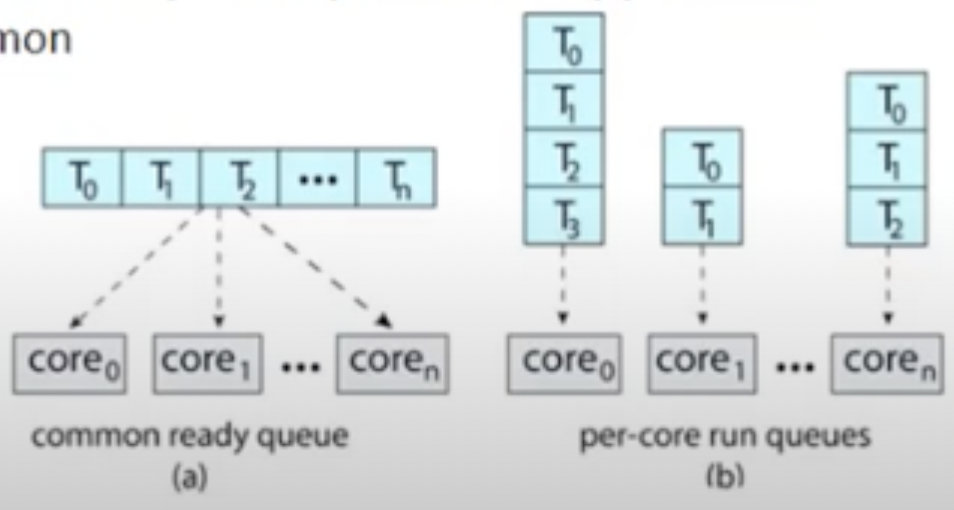
Multiprocessor Scheduling
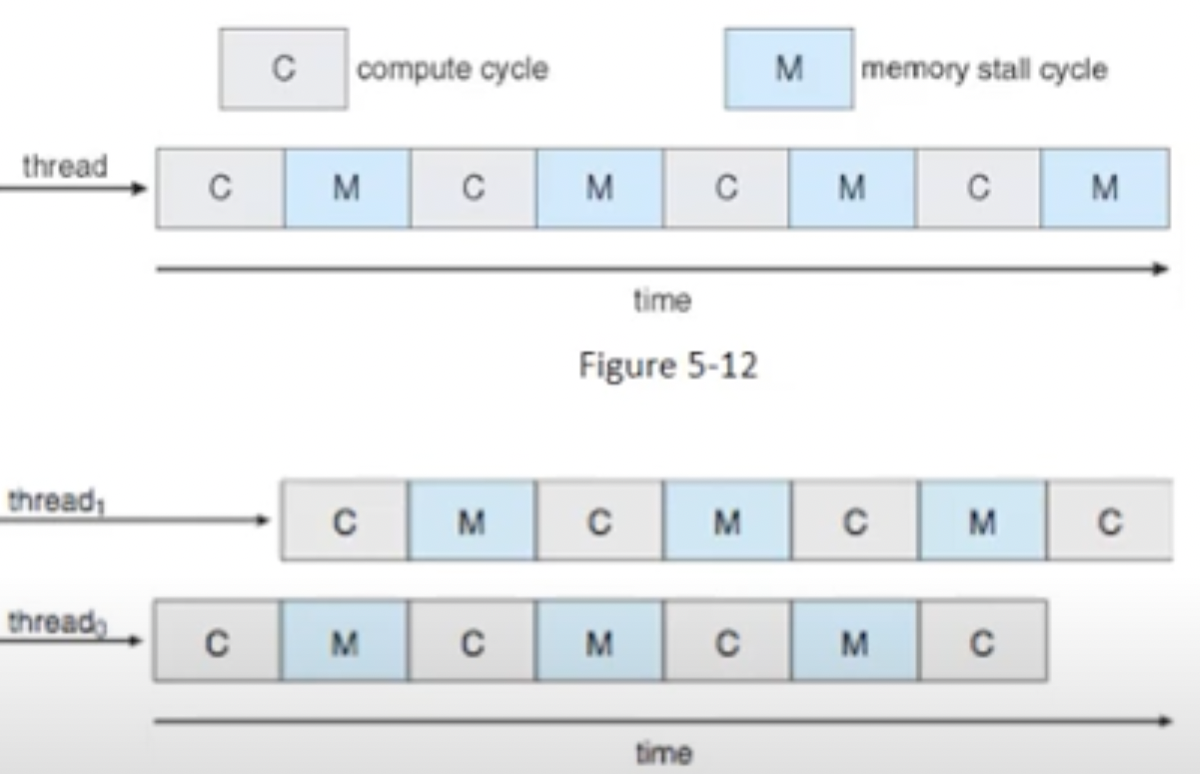
Multithreading/ hyperthreading - in a memory stall, a new processes starts execution
If each core has its own queue, then please note the following definitions:
- load balancing - evenly distribute the workload
- push migration - if too much work push a process to another core’s queue
- pull migration - if too little work pull a process from another core’s queue
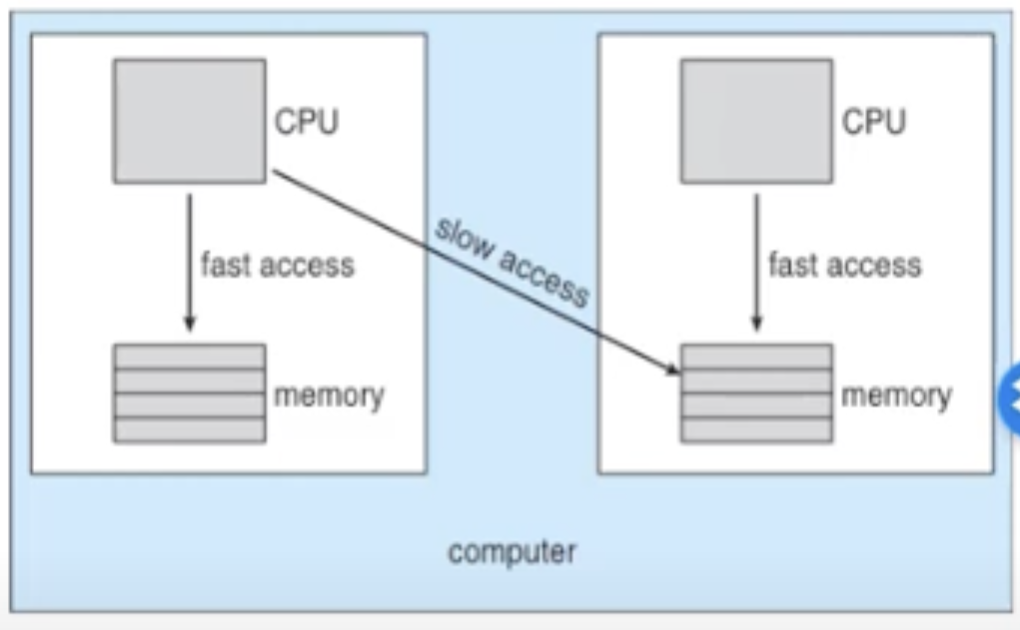
Processor affinity - processes want to stay on the same core, since it is quicker
soft affinity - don’t want to stay that much
hard affinity - HAS TO STAY