Class/Object Identification
Strategies
Brainstorming
- Where a group of people sit around, and offer ideas
- Initial list of objects is created
- Attributes, relationships and methods are spoken about in the second round
Common object lists
- A list of objects typically found in business
Includes
- Actors (user)
- Physical things (like a desk)
- Events (like a meeting)
- Interactions (like a sale)
Analysts of Use case descriptions
- Nouns are typically classes
- Information about nouns are typically attributes
- Verbs are typically methods
Pattern
This is a group of classes that solve a common problem
Example: shopping, bank transactions
Class Responsibility Collaboration (CRD) cards
Used to identify the responsibilities and collaborations
Responsibility - Its methods, attributes and relationships
Collaboration - Other classes necessary for its responsibilities
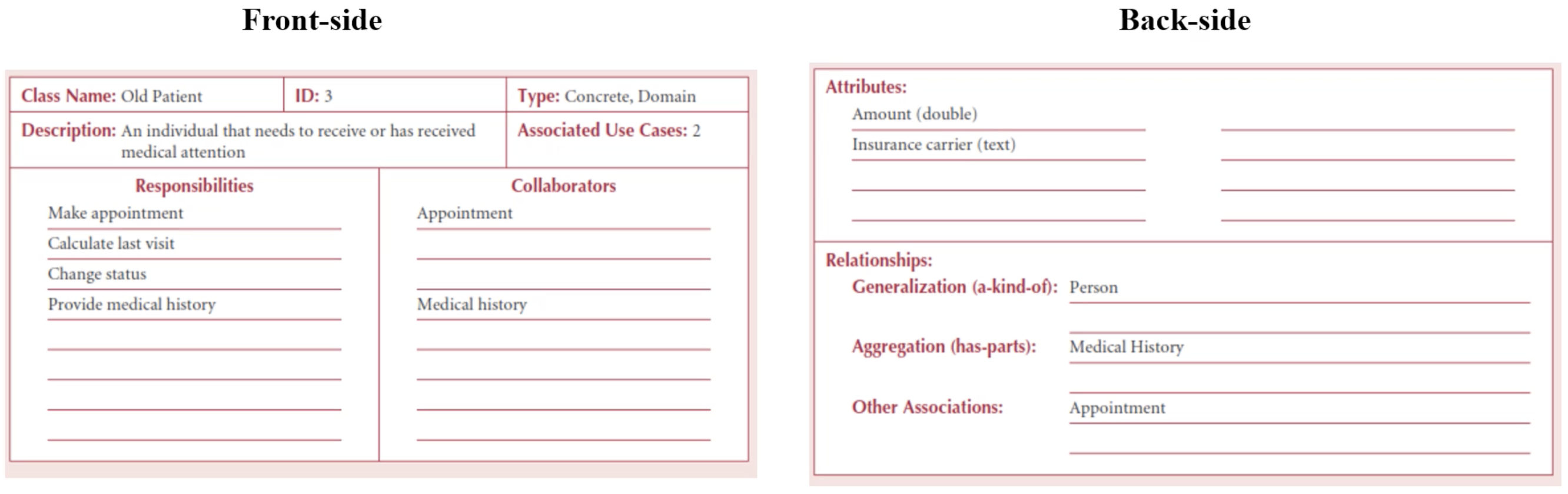
CRC card & role playing example
It is good because it can help you find more objects
Team members play the roles of objects and actors
Act of each use case
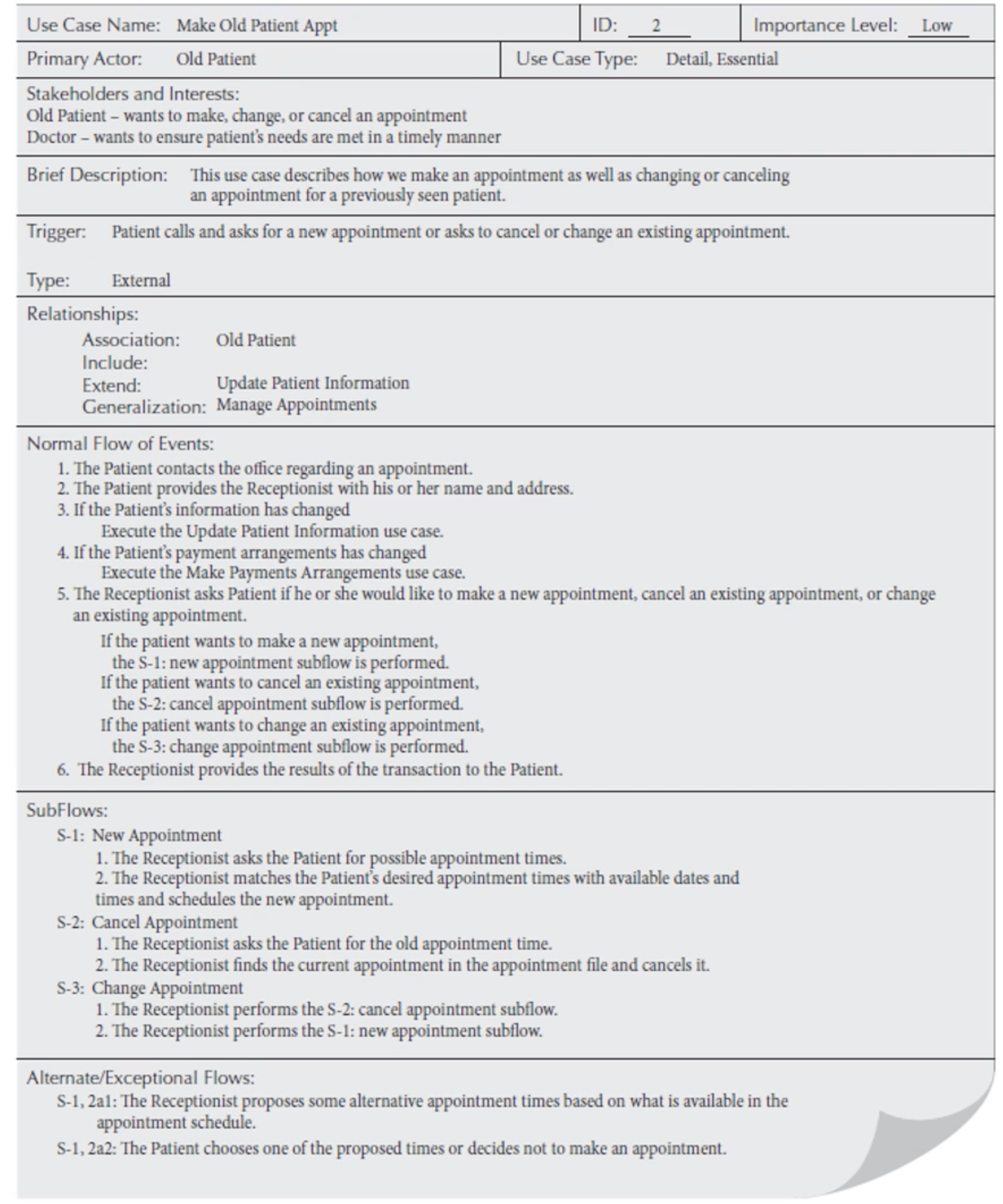
Class, Attribute and Operation balance - Refuses to the fact that each must be used atleat once in one of the use cases, or there is no point in having it
Methods
Signature - Different attributes about a method like its name, return data type...
Messaging - Is when a method calls another method
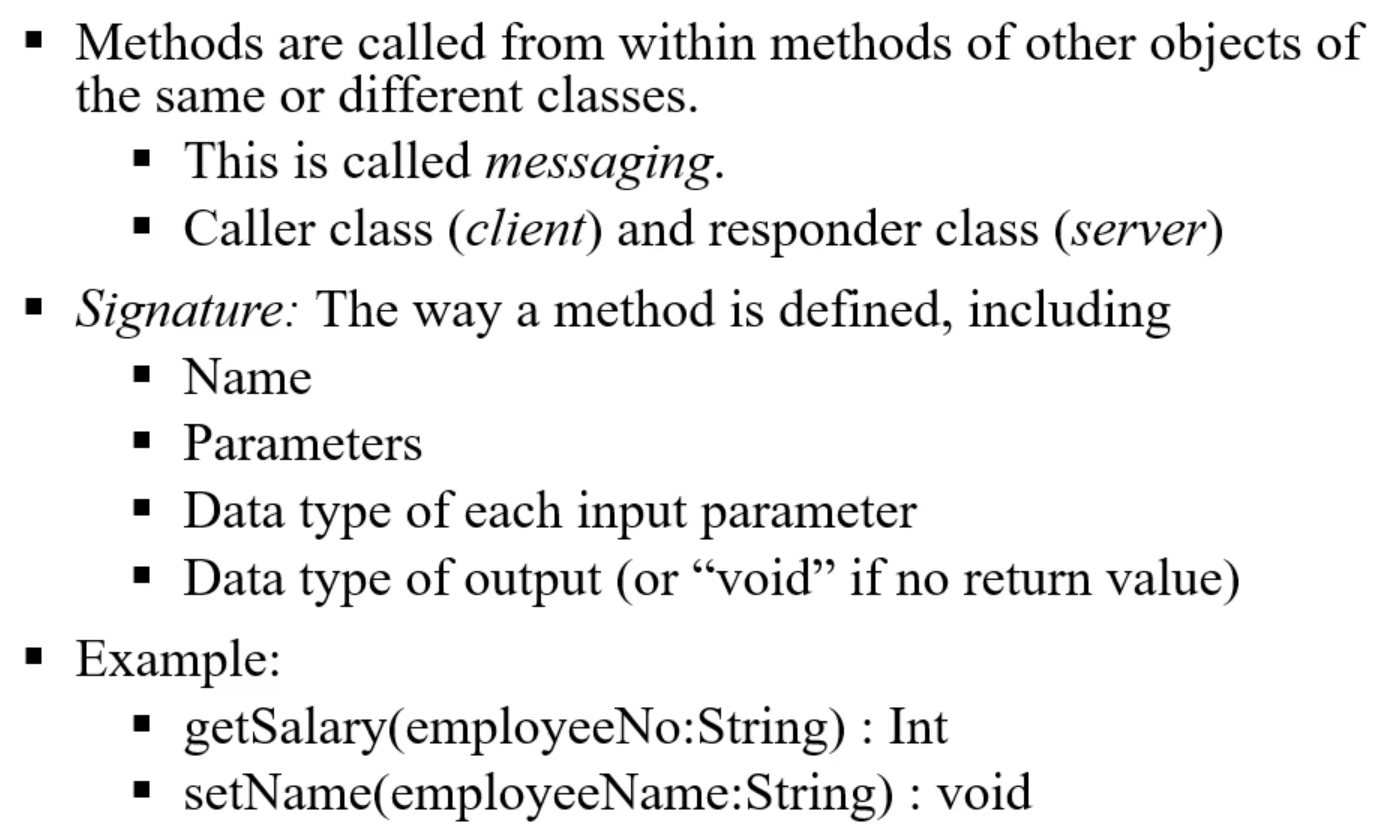
Overloading - Methods within a class have the same name but with a different Signature
Overriding -
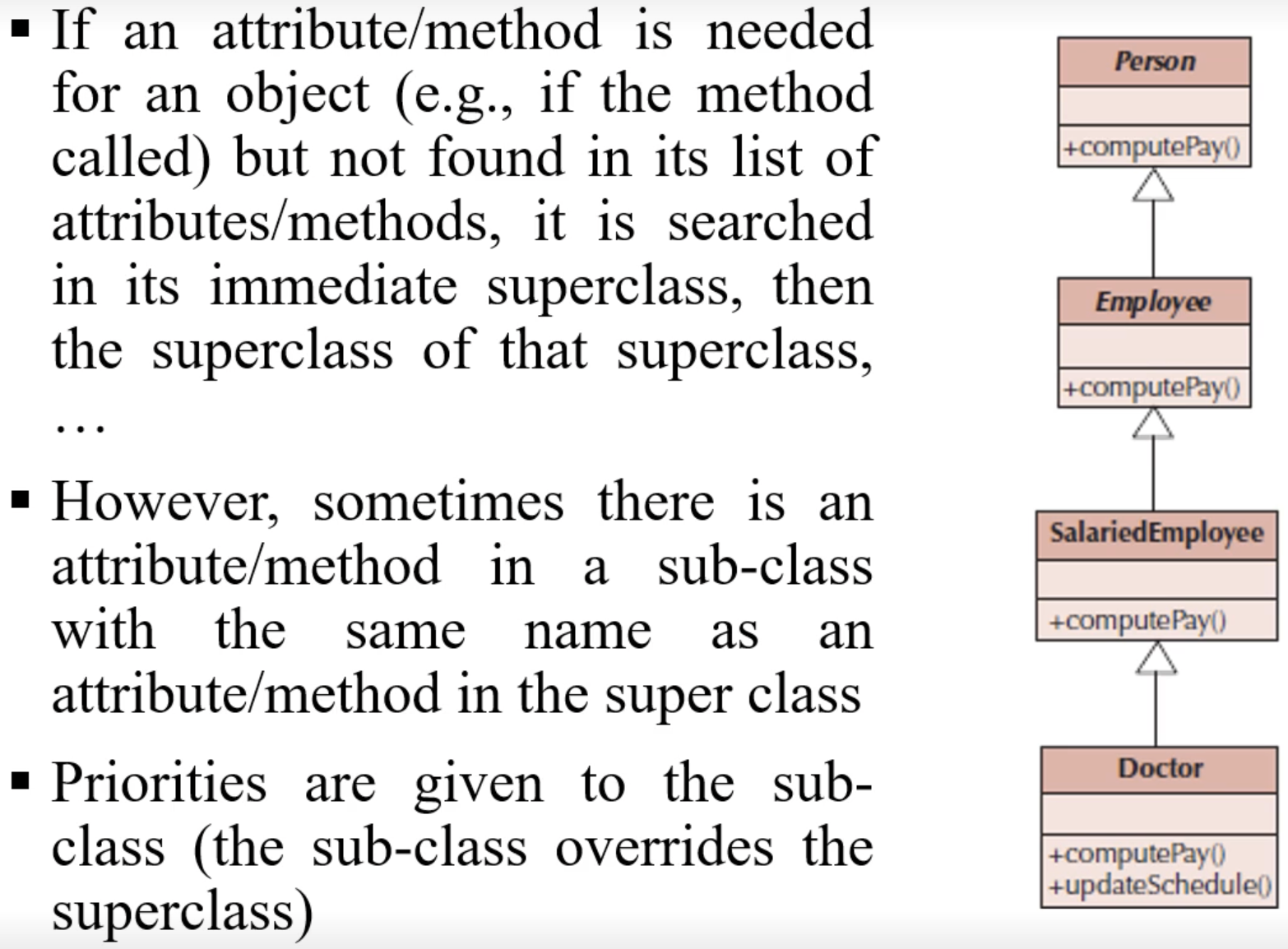
Public - External & internal methods can interact
Privet - Only internal methods can interact
Get and Set methods typically used for accessing privet attributes
Dont mention on the CRC cards ect... to save space
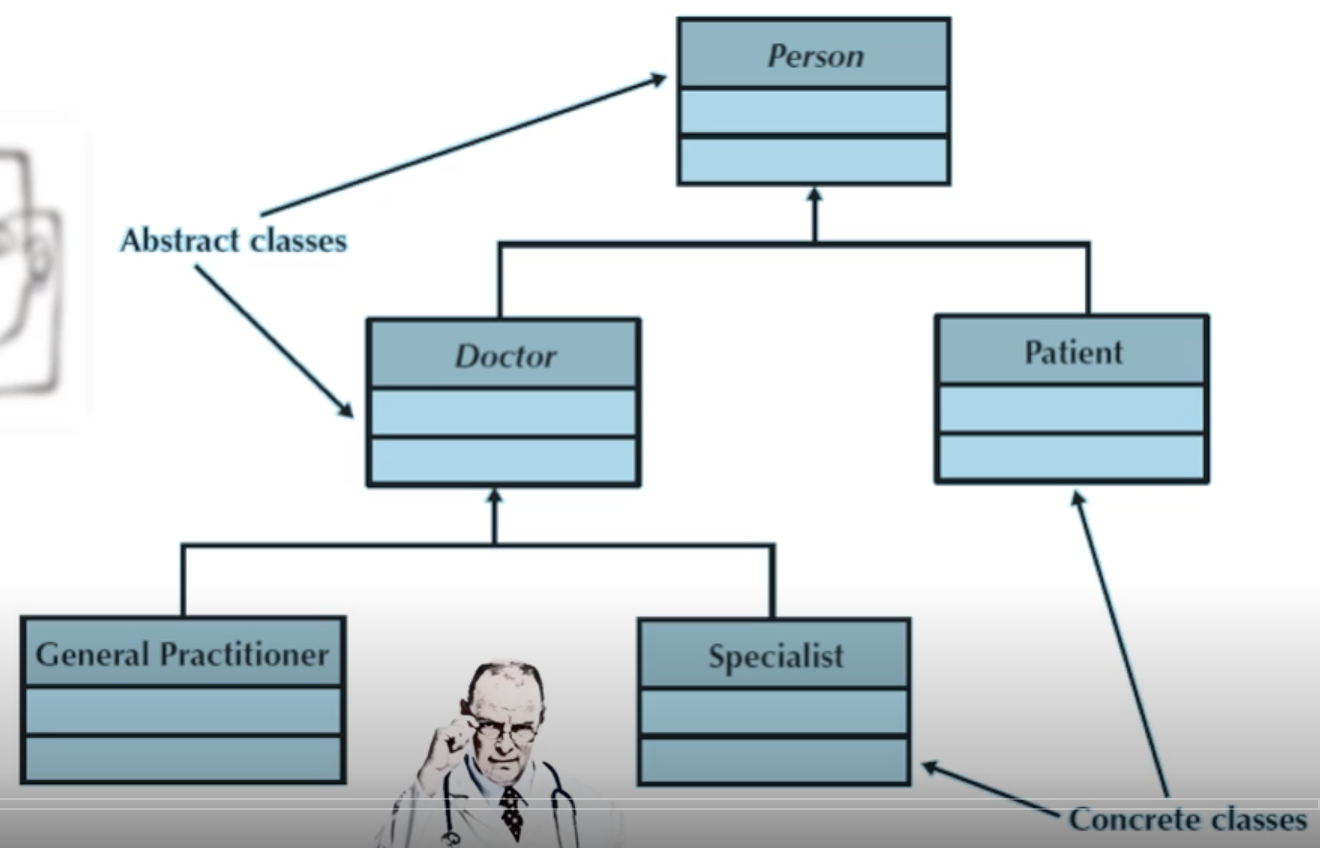
Abstract Class - don't exist in the program, only used for abstraction (this does not mean all super classes are abstract)
Concrete Class - does exist in the program
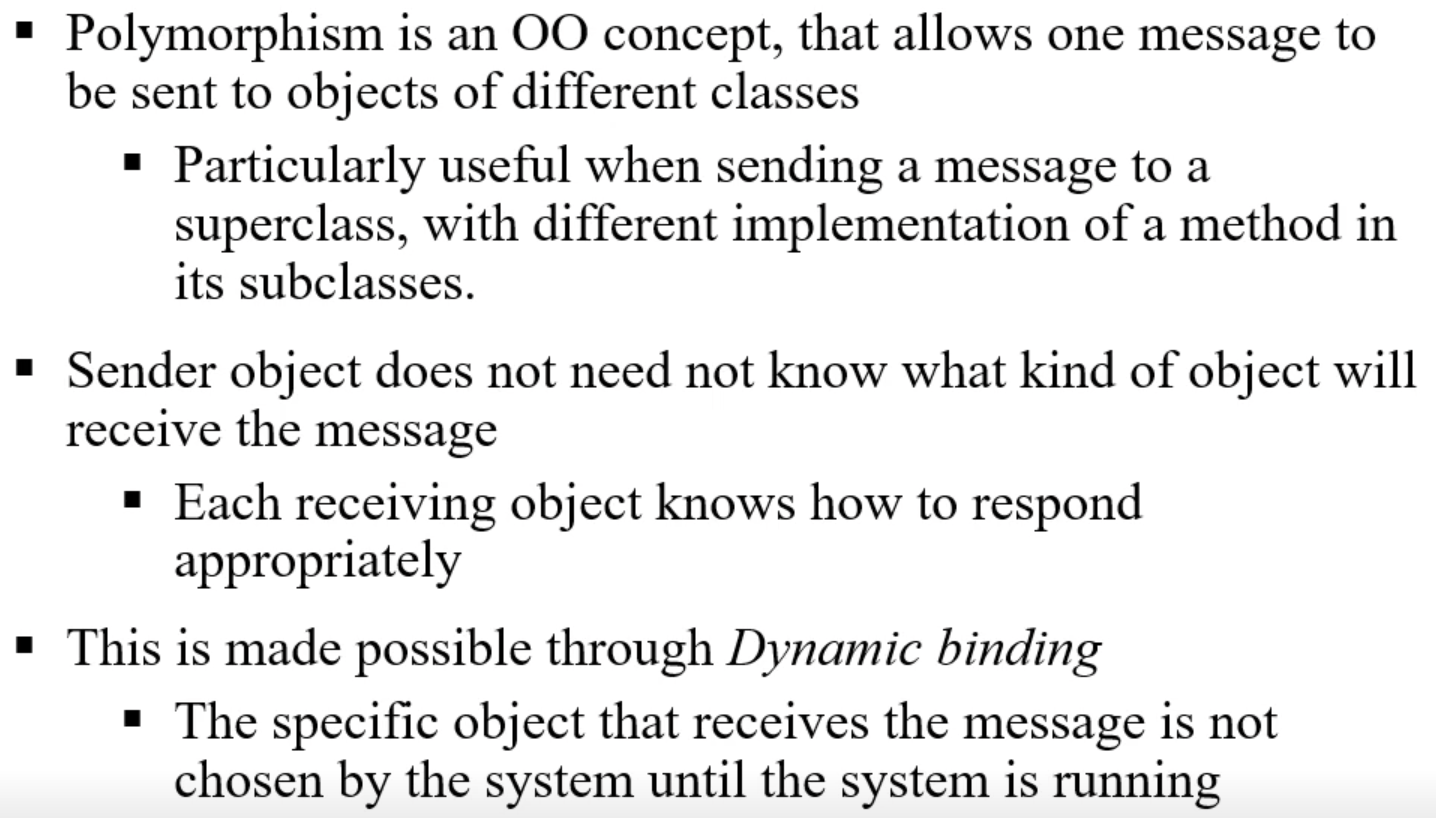
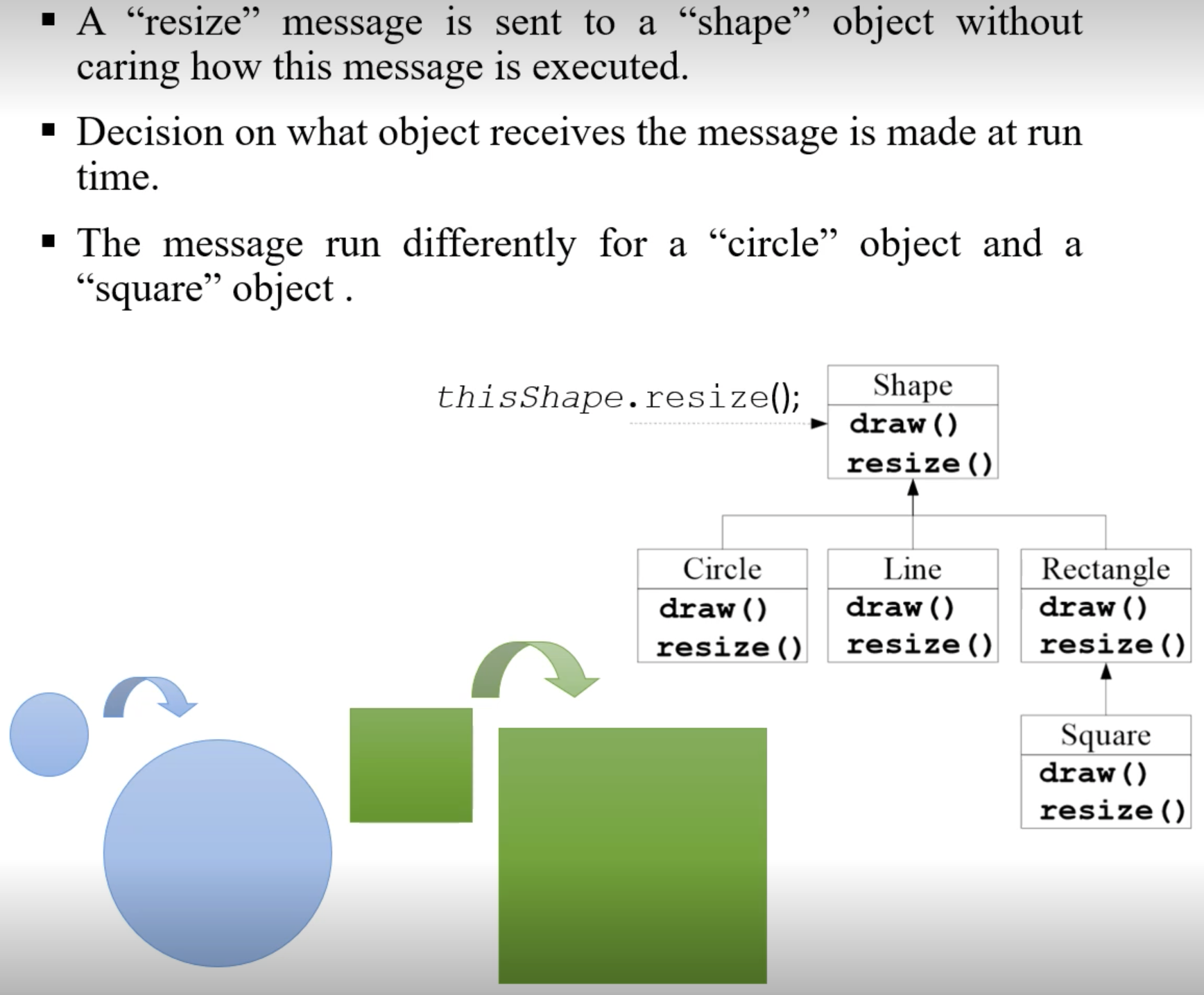
Polymorphism -