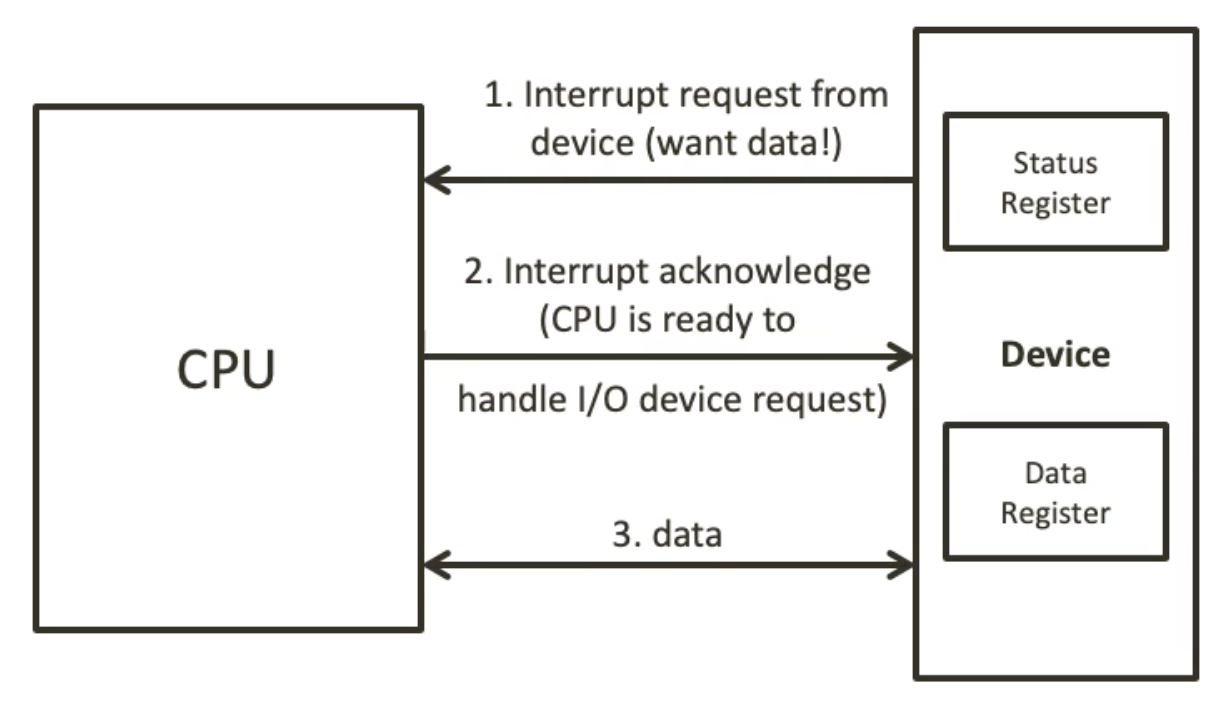
Buses & I/O
What is a bus
It is a connection that allows for data to be passed around a computer
What is bus skew
When data on data lines travels at different speeds, due to a high clock speed
What is a bridge
It is a device that connects two or more LANs
Types of buses
Draw and describe the following
Single bus
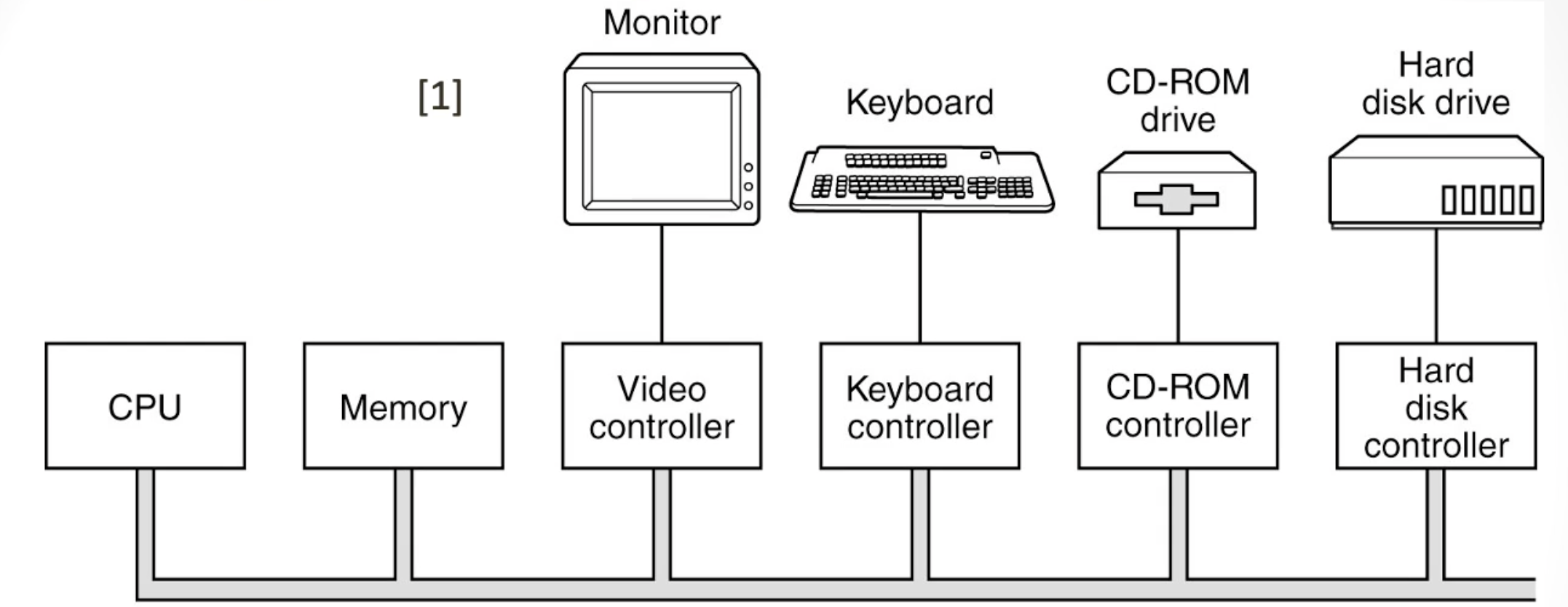
- Has one bus for the whole device
Configurations
- interrupt
- Master / Slave
- Arbitrated
Hierarchical Buses
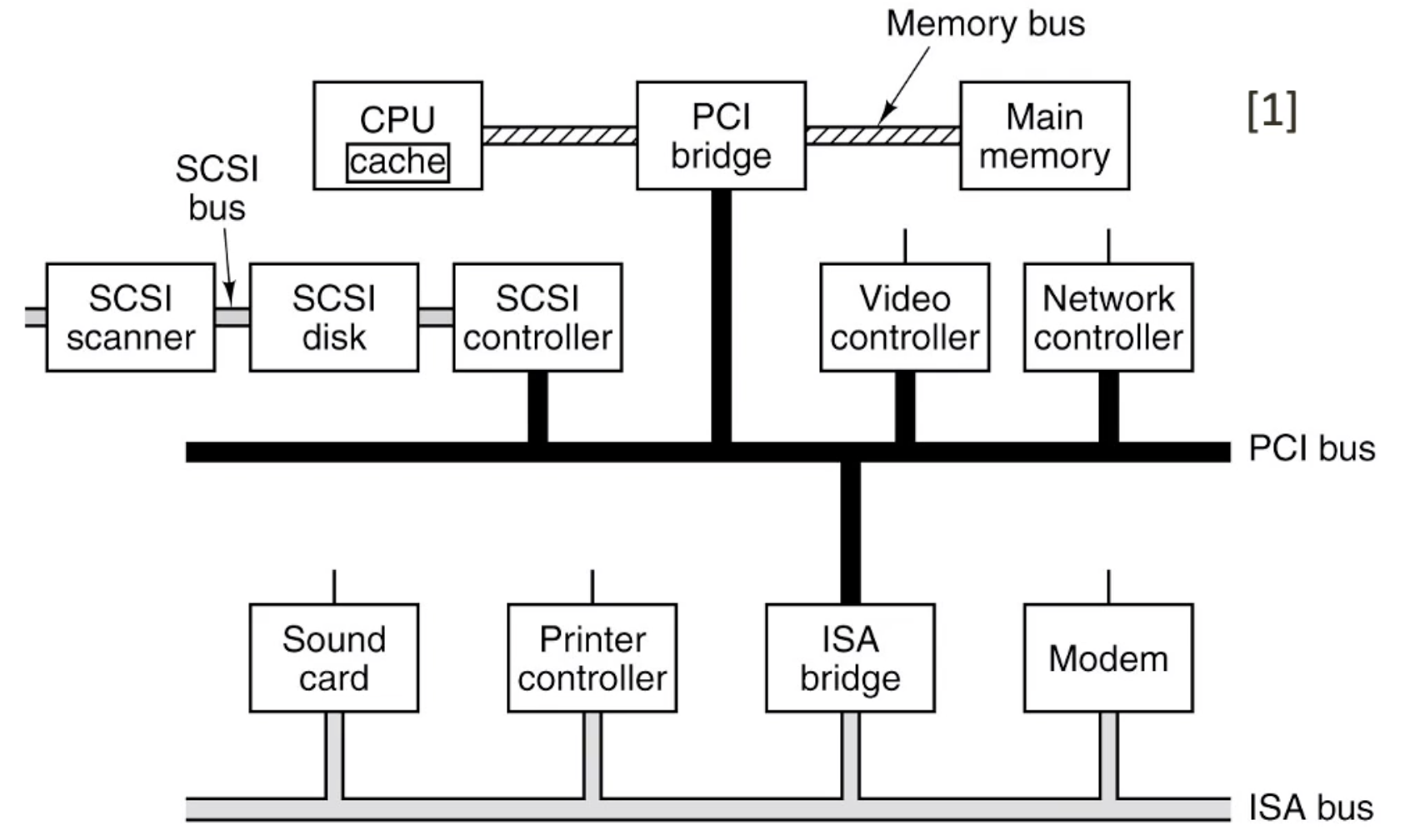
- In the real world we tend to use multiple buses
- They are used in a hierarchical structure
- Reduces conflict
- Controllers and Bridges control the buses
Modern Buses
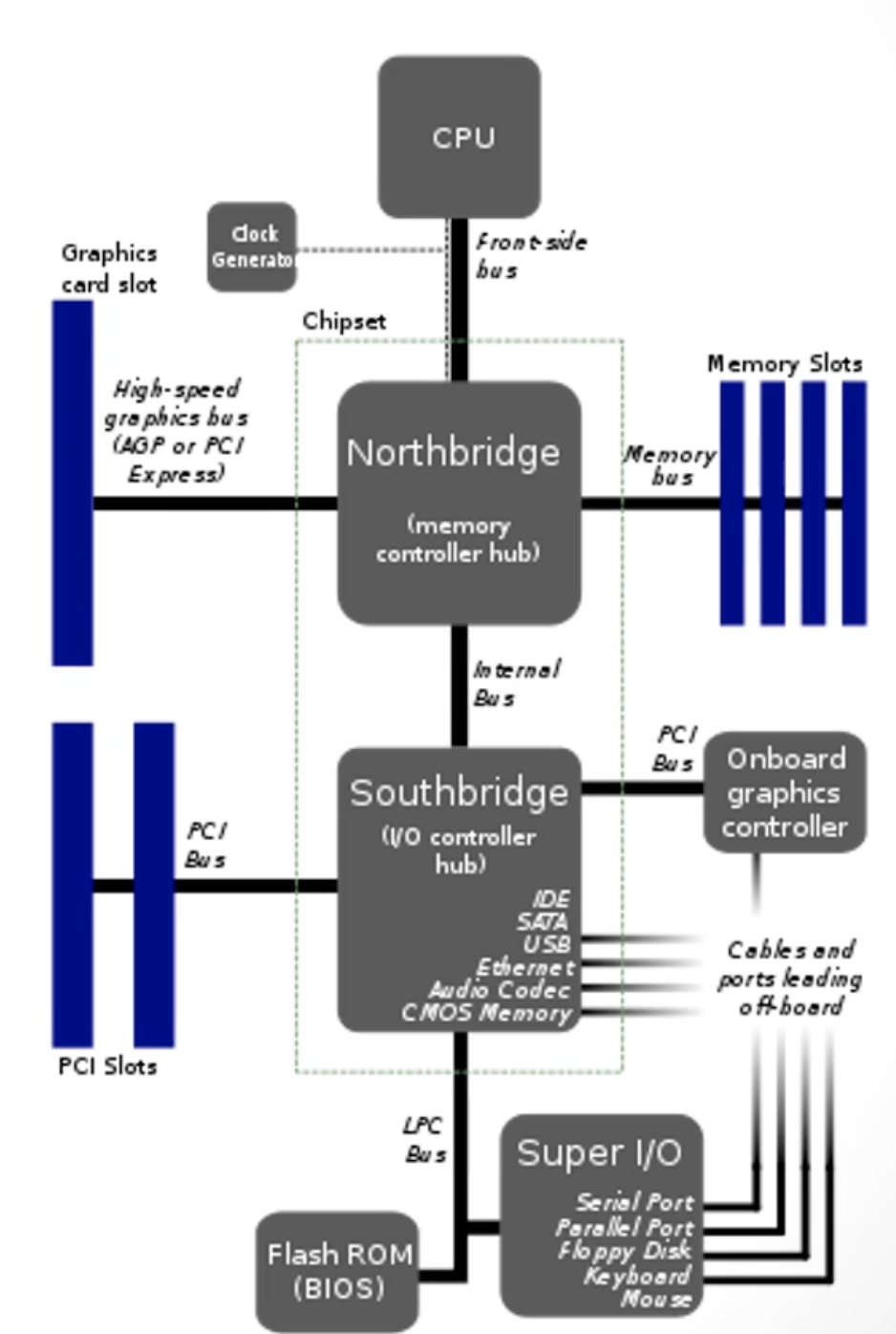
- Made up of a north and south gate
North gate
Connects the CPU to high speed devices like RAM and external cache, even the GPU
South gate
Connects the CPU to slower devices like Secondary storage, I/O devices
Characteristics of buses
What is bus width?
How many bits can be sent in one go along a bus
Name a limitation with the following
Address line
Limits the amount of data the CPU can address
solution
Have a bigger bus
problem
costly
Data line
Limits the amount of data that the CPU can receive
solution
Increase clock speed
problem
Increased clock speed can lead to data skew
How do you solve these limitations?
Have a multiplexed bus
Draw a standard bus model vs a multiplexed bus model
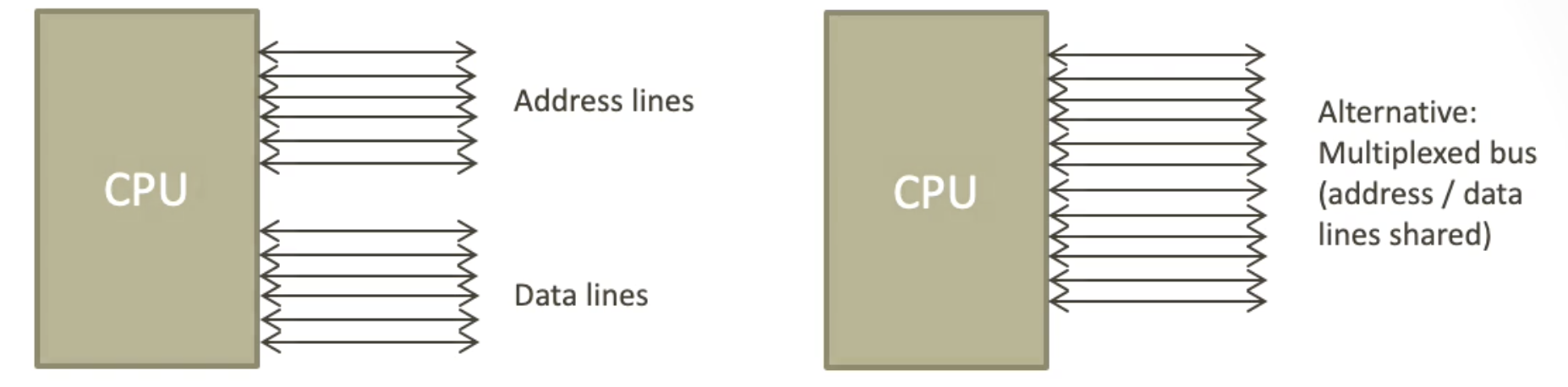
Draw a master and slave network diagram

What is the control line
- Single directional
- Sends acknowledgements and requests
- What type of data
What is the data & address lines
- data addresses and complex comands are sent on this line
- bidirectional
What does a bus transaction consist of?
- Master sends out a command with a address
- Slave with either store or send data
define the following
Synchronous bus
- Control line needed for clock speed
- Data transfer relative to clock speed
- Fixed communication protocol
Asynchronous bus
- Un-clocked
- Additional control lines allow for handshaking protocol needed for synchronisation
What is bus arbitration
This is were multiple devices are trying to used the bus at the same time
What should a bus arbitration scheme attempt to balance
Fairness
Priority
Name all the arbitration scheme classes
https://www.ques10.com/p/8753/what-is-bus-arbitration-explain-any-two-techniqu-3/
Daisy chain arbitration
Device that is closest to the central bus arbitrator, has priority
Centralised / parallal arbitration
Single device controls the priority
Distributive arbitration by self selection
Individual devices identify them selves on a bus and will individually and consistently identify priority
Distributive arbitration by collision detection
Devices use the bus when its not busy and if it is they try again later (ethernet uses this)
PCI and USB buses
Note: These wont appear in the exam however you must know them well
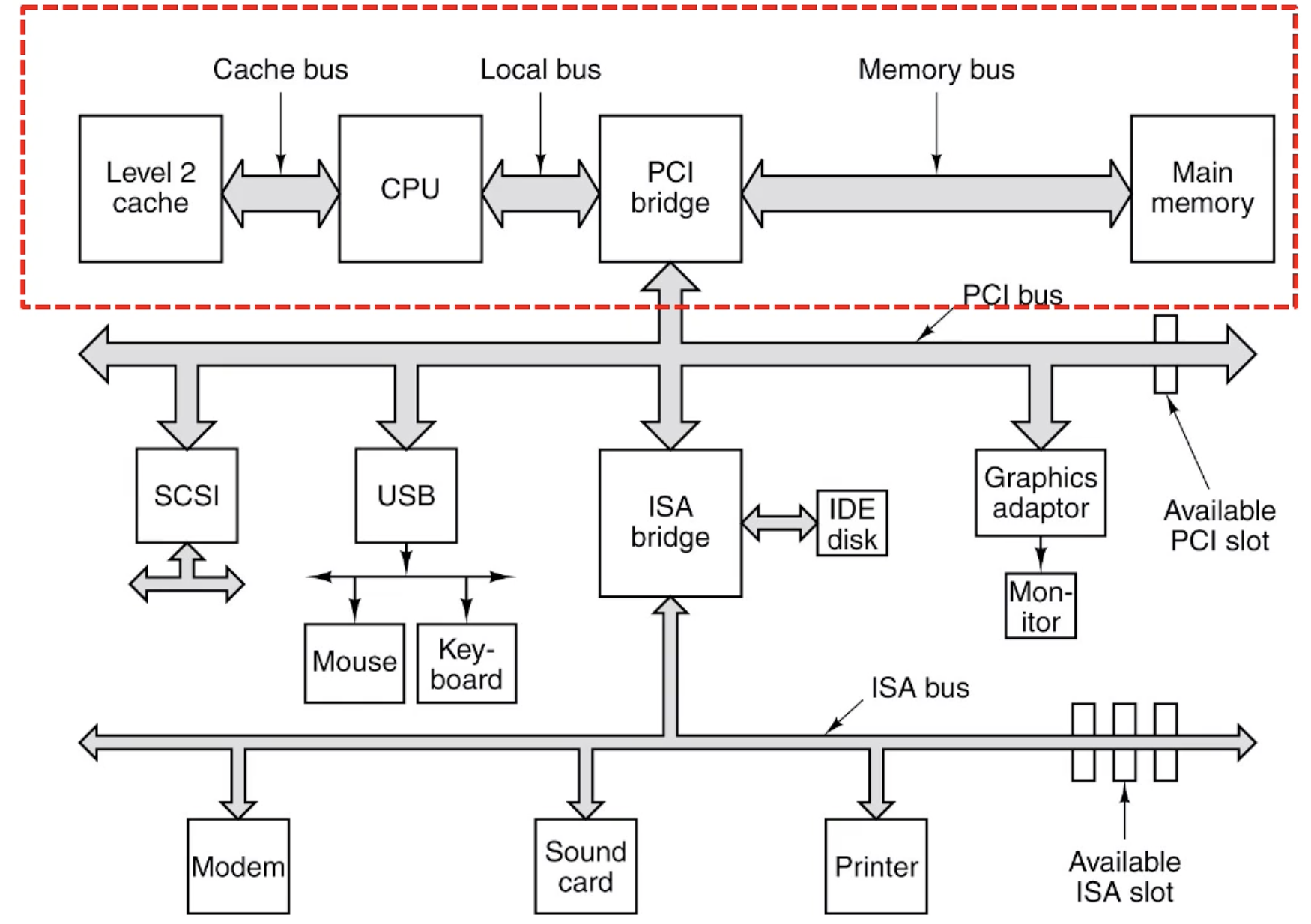
What does PCI stand for
Peripheral Component Interconnect
Generalised PCI bus structure diagram
What does USB stand for
Universal Serial Bus
What does each of the pins do?
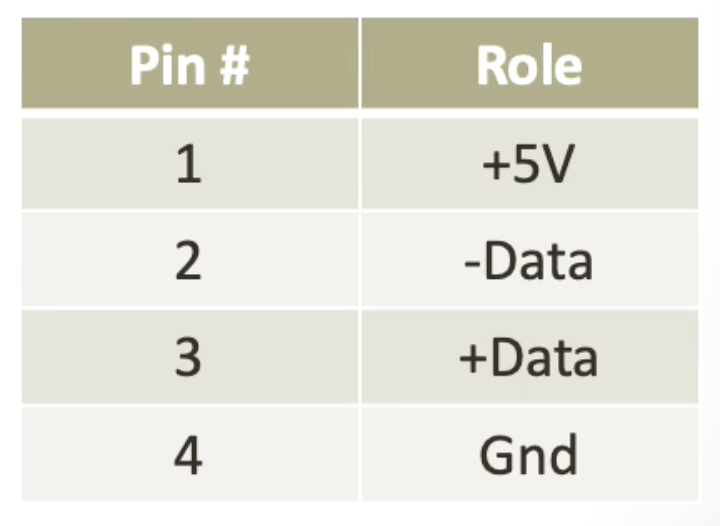
What kind of flow control does it have?
Stop and wait
What is the max length for full speed?
5meters
Managing I/O using Polling and Interrupts
What is polling?
This is when the processor will cycle through the devices, asking if it is ready (busy-wait I/O)
When is polling used?
When the processor is faster than the devices
What is interrupts?
This is when the device will ask the CPU for data
How does interrupts work?
- Device will notify CPU need/has data
- Device must wait till CPU is ready
- CPU will context switch (baso store the PC value somewhere else ready to come back to it later)
- CPU will then do the process
- CPU will then restore context (revert back to the original value of the PC)